 Neatkept
How to make an inventory for a furnished rental flat
You let one or more furnished flats. At every handover someone asks what was there, and in what state.
Updated
Why a furnished flat needs a list
A furnished flat holds hundreds of things that belong to you, and someone else uses them every day. When a tenant moves out, the questions come fast. Were there six glasses or eight? Was that mark on the table already there? Did the flat have a second set of keys? Without a list made at check-in, every answer is your memory against theirs.
A good inventory makes the handover short and fair for both sides. It also helps you run the flat: you know what to replace, what spares you have, and what the flat is worth if something goes wrong.
Go room by room, in the same order every time
Walk the flat in a fixed route, for example from the front door clockwise, and use the same route for every flat you let. In each room, list what is there and what state it is in. A useful line names the thing, says how many, and notes the condition in a few words.
- Furniture. Beds, mattresses, sofas, tables, chairs, wardrobes. Note colour and any marks.
- Appliances. Fridge, washing machine, oven, kettle, iron, TV. Make and model help with repairs.
- Kitchenware. Count plates, glasses, cups, cutlery, pans. These go missing most often.
- Textiles. Curtains, bedding sets, towels, rugs. Count them and note stains.
- Fixtures. Walls, floors, windows, lamps, blinds. Photograph any damage you already know about.
- Keys and meters. How many keys and fobs, and the meter readings on the day.
Photograph the condition, not only the things
Photos are what make an inventory hard to argue with. Take a wide shot of each wall from the doorway, then close-ups of anything marked, scratched or worn. Open cupboards and photograph what's inside, so the count of plates has a picture behind it. Make sure each photo carries its date; most phones keep it with the file.
Do the same at check-out, from the same spots. Two photos of the same corner, months apart, answer the question better than any description.
Keep a separate list for each flat
If you let more than one flat, keep a list per flat, not one long list for everything. Each flat then has its own record for its own tenant, and nothing from one address turns up in the paperwork for another. Use the same structure in each: rooms in the same order, things named the same way. Then comparing flats, or ordering six new duvets for all of them, takes a minute.
Spares often live somewhere else: a storeroom in the building, a cellar, your own home. List them by where they are. When a tenant calls about a broken kettle, you see at once whether a spare is nearby.
Handover and the years between
At check-in, walk the flat with the tenant if you can, list in hand. Agree on anything that isn't right and add it to the list on the spot. Give them a copy. At check-out, walk the same route and compare.
Between tenants, update the list whenever something changes: a new washing machine, a replaced lamp, three glasses gone. If updating takes one photo and a few words, you do it when it happens instead of trying to remember at the next handover. Keep the codes for the door, the key safe or the building entrance with the flat's record, somewhere locked, and share them only with people who need them.
Doing it with Neatkept
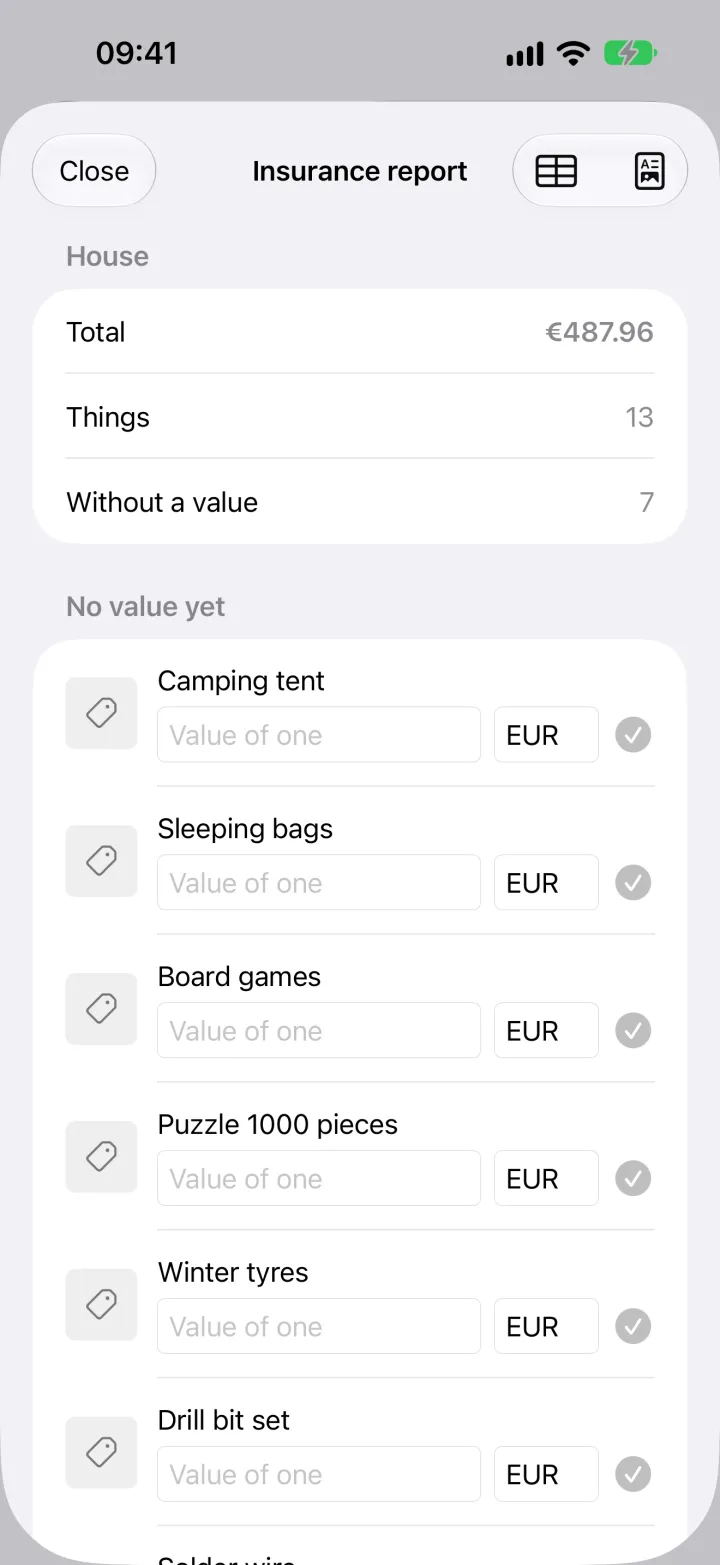
In Neatkept each flat is its own property in Places, with rooms, cupboards and a storeroom under it. Photograph an open cupboard or a shelf and AI proposes what is in it; you keep or drop each thing, and each one keeps its photo. For a handover, open the flat and choose Insurance report: every thing with its photo, place, quantity and value, as an A4 PDF to print or share, or a CSV. If someone helps you run the flats, invite them to the household as an editor. Door and key-safe codes can sit on the flat as encrypted lock codes that open with Face ID or a fingerprint. The insurance report page shows the report step by step.
Questions and answers
Should the tenant sign the inventory?
It helps. A list that both of you looked at on the same day, with photos and a date, settles most questions at the end. Whether a signature is required and what it means depends on your lease and local rules, so check those.
How detailed should a rental inventory be?
Detailed enough that a stranger could check it. "Sofa, grey, 3-seat, small stain on left arm" is useful; "sofa" is not. Count small things like glasses and towels, and photograph anything with marks or wear.
How often should I redo it?
Check it at every check-in and check-out, and update it whenever you add, replace or remove something. A full new pass once a year, or between long lets, catches what slipped through.
What about spare linen and things kept in a storeroom?
List them too, by where they are: "Storeroom, box 3: two duvet covers, four pillowcases". When a tenant reports a broken kettle, you know whether a spare is in the flat, in the storeroom or at home.
Neatkept for this
A list for the insurer
You're renewing the home insurance, and the insurer asks what's in the house and what it's worth. The list is already in your phone.
Share it with the family
You know where everything is, and everyone at home keeps asking you. Let them find it themselves.
Unpack after moving
The move is done and the hallway is full of boxes you won't unpack this month. One photo per box, and you still know what's in each.
All your places
Every home you have, in one tree. Things sit in a box or right on a shelf, and each one has a full path.
Capture from a photo
Photograph an open box or a shelf. Neatkept lists what it sees, and you decide what to keep.
Insurance report
A list of everything in a home, with photos and values, ready for your insurer.
Share with family
One inventory for the whole household. Everyone finds things, and you decide who can change them.
Lock codes
The garden gate, the storeroom door, the padlock on a crate. Neatkept keeps their codes, sealed.