 Neatkept
Seasonal storage: how to pack winter and summer things and find them next year
Twice a year the coats and the sandals change places. Six months later, nobody remembers which box the ski gloves went into.
Updated
Plan the swap before you pack
A seasonal swap goes wrong when it starts at the cupboard: things go into whatever box is near, and in six months you open all of them. Spend ten minutes first. Decide which things change with the season (coats, boots, ski gear, swimwear, the fan and the heater), where they will wait, and how many boxes that takes.
Pair the seasons. The box that holds the summer clothes in winter can hold the winter clothes in summer. Same box, same place, opposite contents. Then you never hunt for an empty box, and the shelf always has the right gap.
Clean, dry, then pack
Pack only what is clean and completely dry. Sweat, food stains and damp are what attract moths and mould over a long season, and a stain that waits six months rarely washes out. Wash or clean, let it air for a day, then pack.
A few habits that keep things in shape:
- Fold knitwear instead of hanging it; it stretches on a hanger.
- Keep down and wool uncompressed; vacuum bags suit synthetic duvets and fleece.
- Stuff boots with paper so they hold their shape, and store leather where it can breathe.
- Take batteries out of anything electric.
- Have ski and bike gear serviced at the end of the season, not at the start of the next one.
Pack boxes you can find without opening
One box, one kind of thing, one person if you can: "Kids' winter clothes" beats "Winter stuff". Put the things you will want first on top. Don't fill a box past the point where one person can lift it.
Then label every box on two sides and the lid. A short code like W01 is easier to keep up than a long description, because the list of what's inside can change and the code stays. Keep that list somewhere other than the box: a sheet of paper, a note on your phone, or an app. Better still, take a photo of the open box before you close it. A photo shows what you packed, including the things you forgot to write down.
Our guides on labelling boxes and QR labels go into more detail.
Store it in the right place
Most homes have one place that suits seasonal storage and a few that don't:
- Good: a dry storeroom, a wardrobe top shelf, under the bed, a heated room you rarely use.
- Careful: the attic (hot in summer) and the cellar (damp, especially in spring). If you use them, plastic boxes with lids, off the floor, nothing that minds heat or damp.
- Bad: next to a heater, against an outside wall that gets cold and damp, on a garage floor.
Keep the boxes you'll need next in front. In autumn, the winter boxes stand where you can reach them, and the summer ones go behind.
The checklist for swap day
- Wash and dry everything that goes into storage.
- Go through it once: anything that no longer fits or hasn't been worn all season goes to a separate pile, not into the box.
- Pack by kind and by person; heavy things at the bottom.
- Photograph each open box, then close it.
- Label two sides and the lid with the box's code.
- Write down where each box went, especially if it went to another home.
- Take the other season's boxes out, unpack, and put the empty boxes back in their place.
Doing it with Neatkept
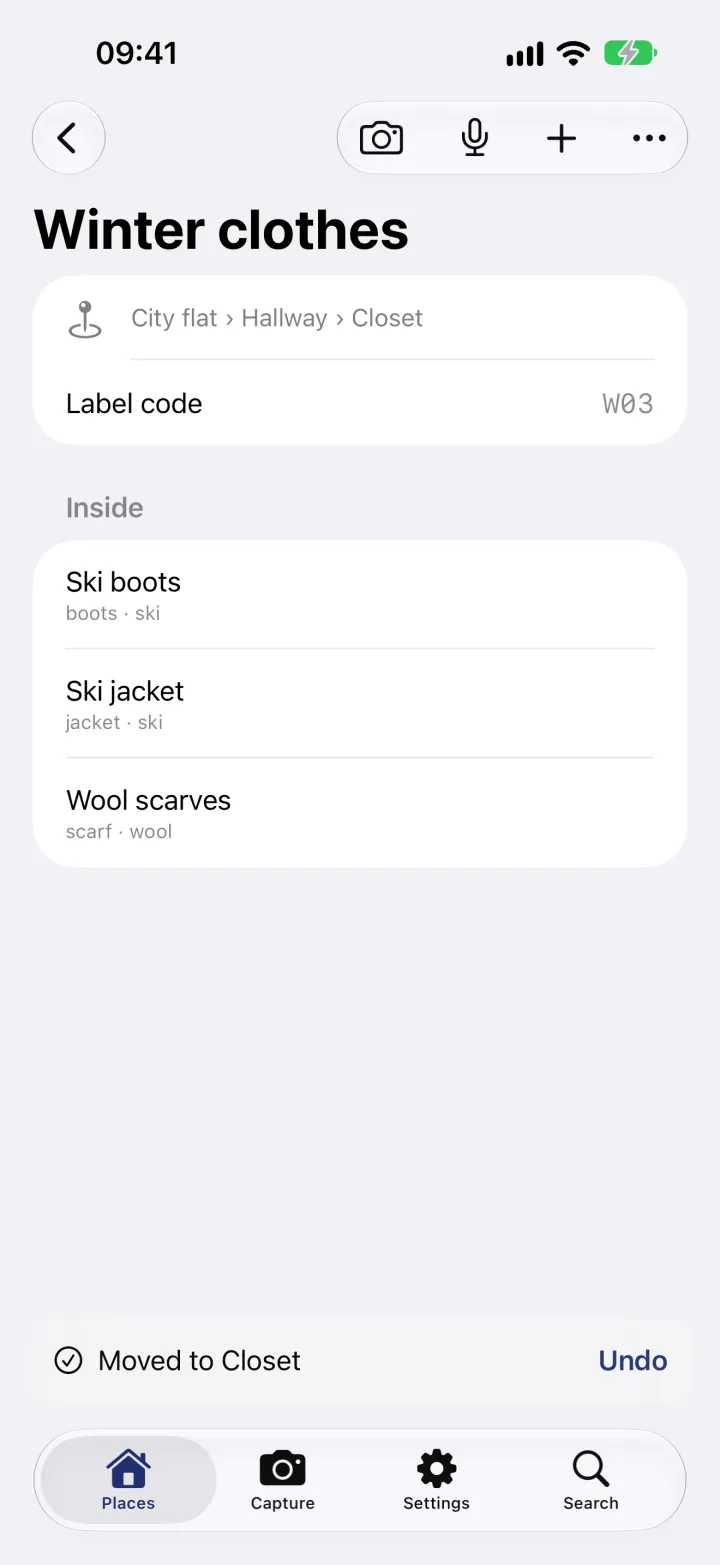
In Neatkept you photograph an open box and AI proposes what is in it; you keep or drop each thing. Label the box with a Neatkept QR label, which opens it from a scan, or write a code like W01 with a marker and type it under the scanner. When the box changes place, open it, tap ⋯ and choose Move the box, even to another home; everything inside goes with it. With labels on boxes and places, the move back is two scans. Next season, search for the ski gloves and get the home, the place and the box. The seasonal swap page shows it step by step.
Questions and answers
Are vacuum bags a good idea?
For bulky synthetic things like duvets and fleece, they save a lot of space. Wool and down need air and keep their shape better uncompressed, so give them a breathable bag or a box with room to spare.
Plastic boxes or cardboard?
Plastic boxes with lids keep out damp, dust and pests, and stack well. Cardboard is fine in a dry room for a season or two, but it softens in a damp cellar and attracts insects. Whatever you use, keep the boxes off a bare floor.
How do I stop moths in stored clothes?
Store clothes clean, because moths go for worn fabric. Close wool in a bag or a lidded box, and check it once in the middle of the season. If you find damage, wash or clean everything in that box before it goes back.
What should never go into seasonal storage?
Anything damp, food, things you might need in an emergency, and documents you may be asked for. Take batteries out of devices before you store them.
Neatkept for this
Seasonal swap
Winter is coming. The box with the ski clothes is in the house's attic, and you live in the city flat.
Find anything in seconds
Your child needs the skis on Saturday, and you have a flat, a house and a garage. Ask once and know where to drive.
Boxes labelled with a marker
No printer, no stickers, just a marker. You write K01 on the box of kids' toys and still find out what's inside without opening it.
Moves
Tell Neatkept where a box or a thing went, and its place is right for everyone in your household.
Labels and box codes
A QR label or a code written with a marker. Either one opens the box in Neatkept.
Capture from a photo
Photograph an open box or a shelf. Neatkept lists what it sees, and you decide what to keep.
Search in your own words
Ask the way you'd ask a person. Neatkept answers with the home, the room, the box and a photo.